
Ghostly Legends of Irish Folklore
Among Ireland's rich tapestry of ghostly legends, the Banshee stands out as a fascinating and mysterious entity. This spirit, often associated with the noble families of Ireland, is both a harbinger and a symbol deeply rooted in the country's folklore, linking the living to the Otherworld.
The Banshee: A Symbol of Family and Death
The Banshee, or "Bean sí" in Old Irish, meaning "fairy woman", is not merely a ghostly terror meant to instill fear, as modern portrayals might suggest. Instead, she symbolizes impending death, appearing to wail and clap for noble families, particularly those with surnames like "O," "Mc," or "Mac." This haunting presence offers a unique link to the past, often seen at the ruins of ancestral homes, maintaining her eternal vigil over the family's legacy.
Interestingly, the Banshee's role has historical roots in the tradition of keening, a form of mourning led by women. These women, sometimes seen as societal outsiders, would guide the spirits of the dead through grief, connecting the living world with the Otherworld through their cries.
Mythical Origins and Association with Castles
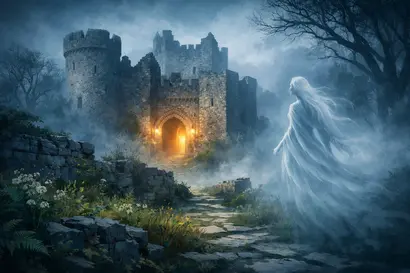
The legend of the Banshee intertwines with many haunted sites across Ireland. From ancient goddesses who influenced battles to real-life professional mourners, the Banshee embodies a rich fusion of myth and reality. She is seen as a protector of lands and families, a spectral guardian whose cries signal both sorrow and continuity.
A fascinating example linking the Banshee to specific locations can be found in the folklore surrounding castles, where her presence is still deeply felt. For instance, tales of banshees warning of death are recorded by authors like Thomas Crofton Croker, illustrating the enduring linkage between family heritage and these spectral figures.
Nature's Influence on the Banshee Legend
One compelling theory for the Banshee’s chilling scream attributes it to the screech of the barn owl, a bird once common in Ireland. These nocturnal sounds, echoing through the night, may have reinforced the banshee myths, especially after being linked to forthcoming tragedies experienced by many families.
Whether through its eerie calls or its rare appearances in family stories, the barn owl exemplifies how natural phenomena could weave their way into the rich tapestry of Irish folklore, enhancing the mystique that surrounds the Banshee.
Connecting with Irish Folklore
Exploring the legends of the Banshee adds depth to our understanding of Irish haunted landscapes and traditions. Her cries symbolize not just loss but are also a reminder of Ireland's enduring connection to its mystical past. As visitors explore sites like Loftus Hall and other storied locations, the tales of the Banshee continue to captivate and engage, offering a fascinating window into the world of spirits and Irish folklore.
For more tales that chill the spine, delve into additional mysterious stories on our Irish Ghost Stories section.
Conclusion
The Banshee remains a compelling figure in Irish folklore, shedding light on cultural perceptions of death and mysticism. As a guardian and omen, she weaves a story that is as much about family heritage as it is about the mysterious echo of the past, a vital chapter in Ireland's rich narrative of haunted legends.
Quick Links

Heritage Supporters

Se presume que Loftus Hall es la casa de campo más embrujada de Irlanda. Se cree que en una ocasión la visitó un persona muuy especial demoniaco, pero además, sus pasillos son recorridos por fantasmas singulares... Aquí la historia...
— MonsterCas (@MonsterCas2) June 10, 2025
#ghost #miedo #fasntasmas #Irlanda pic.twitter.com/YZGEZEQ5oO